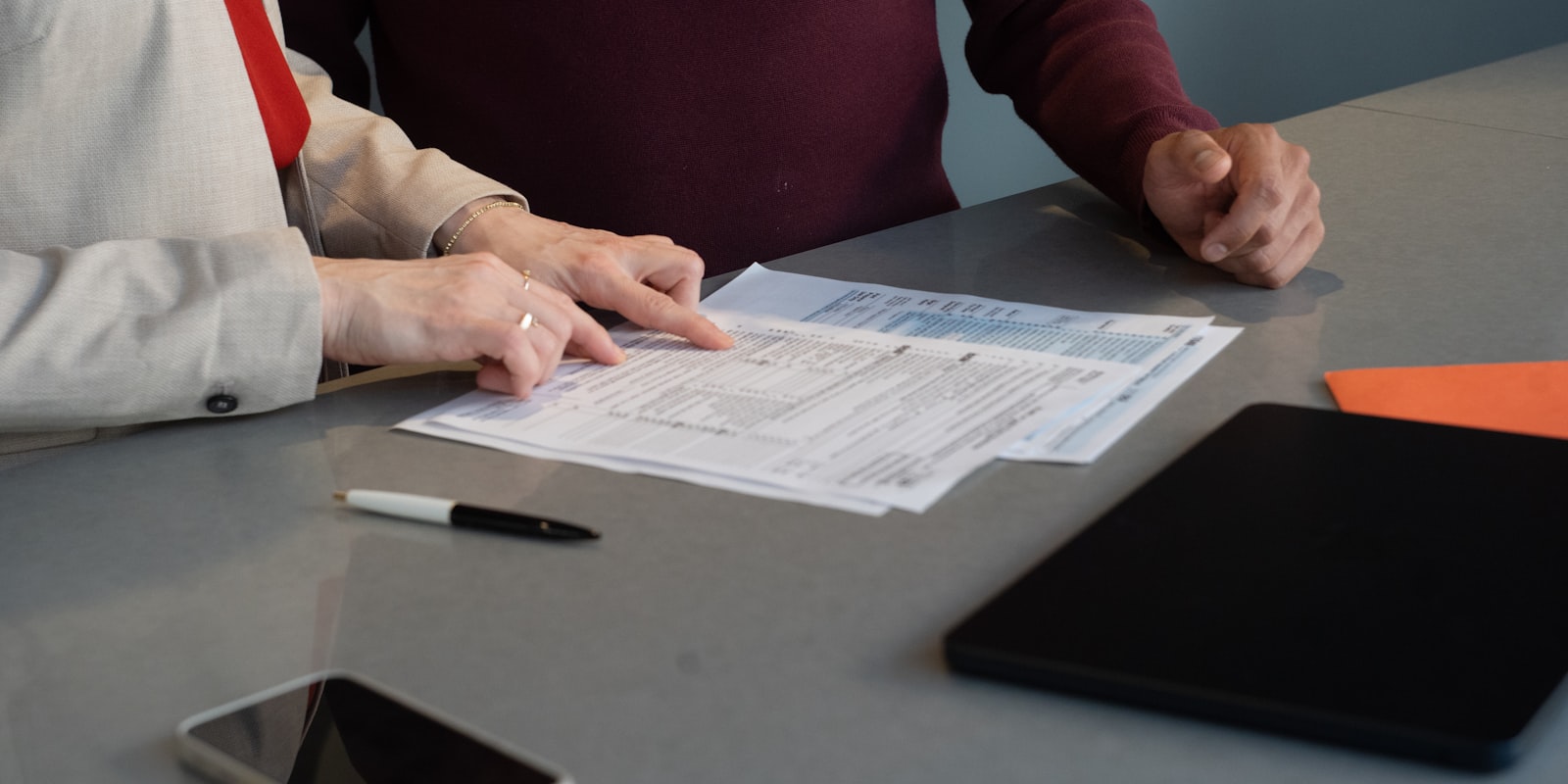
Most contract issues do not arise from malicious intent but from carelessness during drafting. The following errors recur across all contract types: from tenancy agreements and sales contracts to tradesmen's work orders, and can be easily avoided if you are aware of them in advance. On top of that, most of these mistakes are not difficult to correct; simply dedicating a few extra minutes to carefully reviewing the text before signing is sufficient.
Vaguely described subject matter of the contract
The most common mistake is to describe the subject matter of the contract in general terms where specificity is required. Phrasing such as "carrying out construction work" without specifying the scope, or "sale of a vehicle" without stating its condition and accessories, leaves room for differing interpretations by each party. The more precisely the subject matter is described, exactly what is being supplied, in what condition and to what extent: the lower the risk that the parties will later disagree on what they actually agreed upon.
Missing terms and price
Contractwhich does not specify the deadline for completion or the agreed remuneration, is a source of future misunderstandings. Both parties often assume that "the deadline is clear" or that "the price has been agreed", but without written confirmation, reaching agreement on these points later becomes difficult. The deadline and remuneration should be stated clearly and unambiguously in the text, including what happens if completion is delayed or if additional work arises. Especially for contracts where the scope of work may change during execution, it pays to describe in advance the procedure for approving additional work, to avoid disputes over what was part of the original agreement and what falls outside its scope.
Incorrectly stated parties
A typo in the name, an incorrectly stated company name or an outdated address may later cast doubt on who is actually a party to the contract. For companies, it is advisable to verify details in the public register before signing, rather than relying on what the other party dictates. Especially for high-value contracts, it pays to devote as much attention to identifying the parties as to the content of the contract itself. Similarly, before signing, it is appropriate to verify that the person named has the authority to act on behalf of the company: not every employee can bind the company to anything.
Oral additions that are nowhere recorded
The parties often agree on minor changes informally, by phone or in passing conversation, without recording them anywhere. If a dispute arises later, only what is written in the text applies, not any oral agreement. Any change to the original text must be recorded, even if just with a single sentence including the date and signatures of both parties; otherwise, it effectively does not exist.
Unclear termination conditions
In addition to the above, it is often problematic that the contract does not specify how and under what conditions the relationship can be terminated. If a clearly described termination method is missing, in case of disagreement the parties find themselves uncertain whether and how they can withdraw from the contract. It pays to add at least a basic description to the text of what happens when one party wishes to end the cooperation, and how outstanding obligations are settled in such a case.
How to avoid mistakes
A simple ritual helps: after drafting the contract, read it as if you were the other party and look for places where interpretation might differ. For contracts with higher value or non-standard conditions, it is also worth having an uninvolved person review the text before signing, in more complex cases, consult a lawyer.
- Is the subject matter of the contract described specifically, not with a general phrase?
- Are the filling date and remuneration clearly stated?
- Do both parties agree with their identification and current details?
- Does the text capture everything you actually agreed on?
- Do both parties know how to terminate the contract?
Summary
Most contract disputes can be traced back to one of the errors mentioned above: a vague subject matter, missing terms or fees, incorrectly listed parties, or unrecorded oral amendments. Taking care when drafting takes just a few extra minutes; a dispute over an unclear contract costs far more. This is not legal advice, merely an overview of mistakes it pays to avoid.